The site
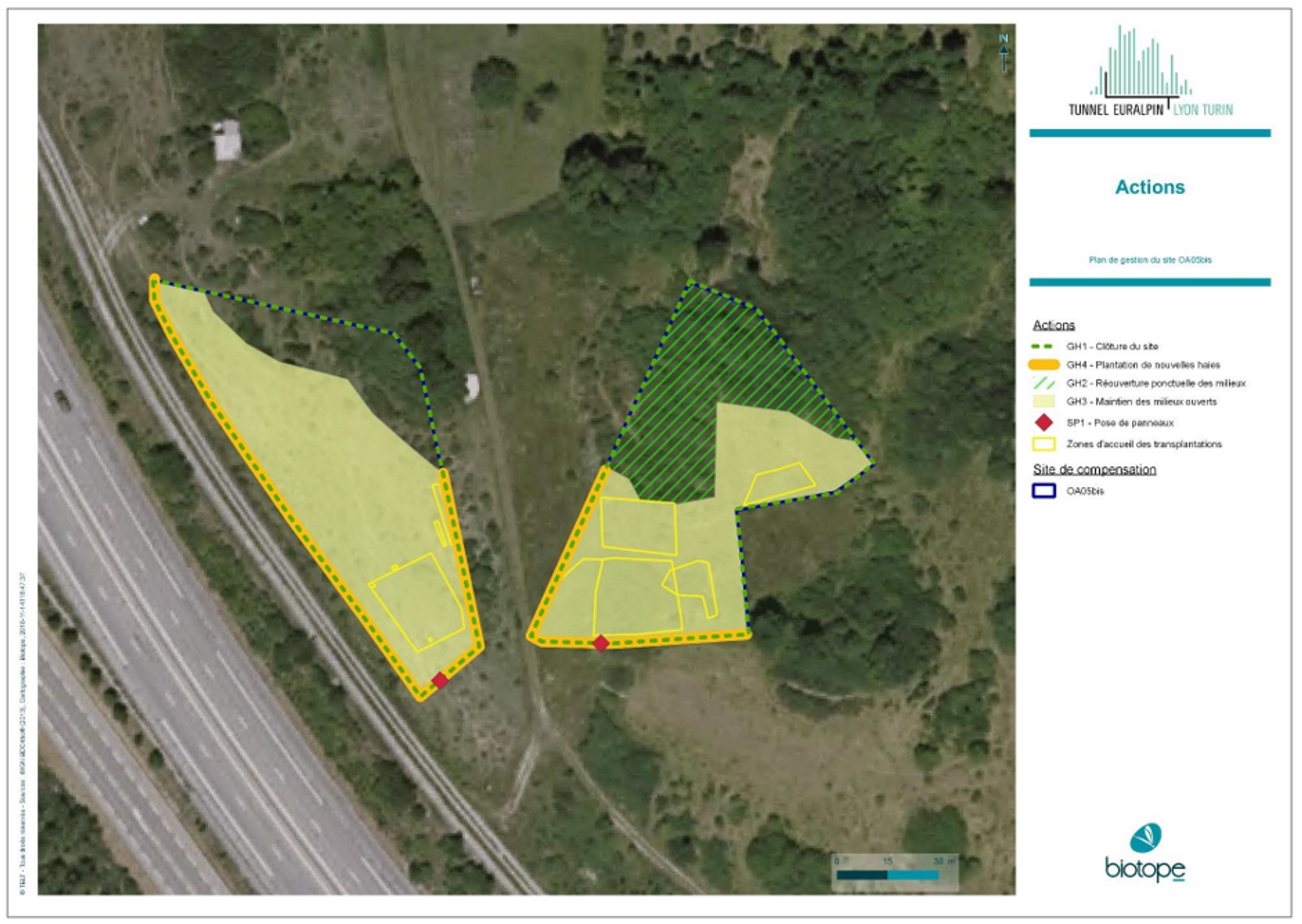
This site, divided into two small sections, adjoins the construction platform at the tunnel entrance. Covering a total area of 0.5 ha, it consists of dry grasslands interspersed with scrub, located below the district of Villard-Clément.
Key issues
Despite its small size, this site hosts numerous protected species, foremost among them the Villard-Clément tulip, one of the Savoy tulip species. The site also contains another tulip species, the early tulip, which is less rare and more widespread, as well as drooping star-of-Bethlehem, wild garlic, and field gagea. The alternation of dry grasslands and scrub also provides a habitat sought by wildlife, particularly birds: the red-backed shrike, the Eurasian hoopoe, and both the stonechat and meadow pipit regularly use the site. Uncontrolled horse grazing could have been detrimental to the maintenance and development of these species in such a small area. The compensation measure also ensures good control of scrub encroachment on the site.
Partners
No specific partner
Objectives
Maintain existing and transplanted protected plant species populations in a favourable conservation status.
Raise public awareness of ecological issues
Maintain generally open habitats
Maintain and develop habitats favorable to hedgerow fauna
Monitor the evolution of faunal and floral species populations on the site
Discover…
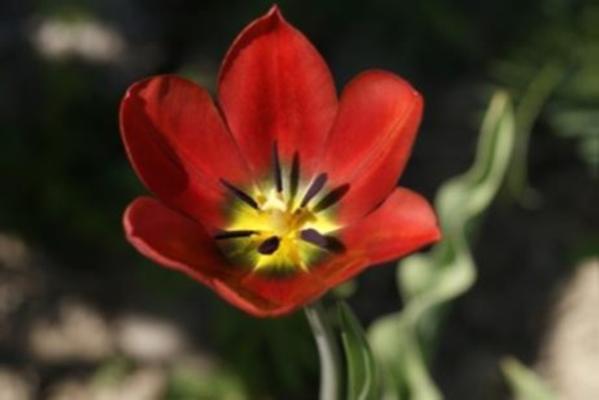
The Villard-Clément tulip. Originally, tulips come from Asia and were introduced into Europe as ornamental plants in the 16th century by the Turks. Lost during transport or mistakenly mixed with saffron bulbs cultivated in Savoie, some tulips genetically diversified to adapt to alpine habitats. Thus, in Savoie, and more particularly in certain localities of the Maurienne valley characterized by a specific microclimate, there are a few endemic tulip species found nowhere else in the world: this is the case of the Villard-Clément tulip.