The site
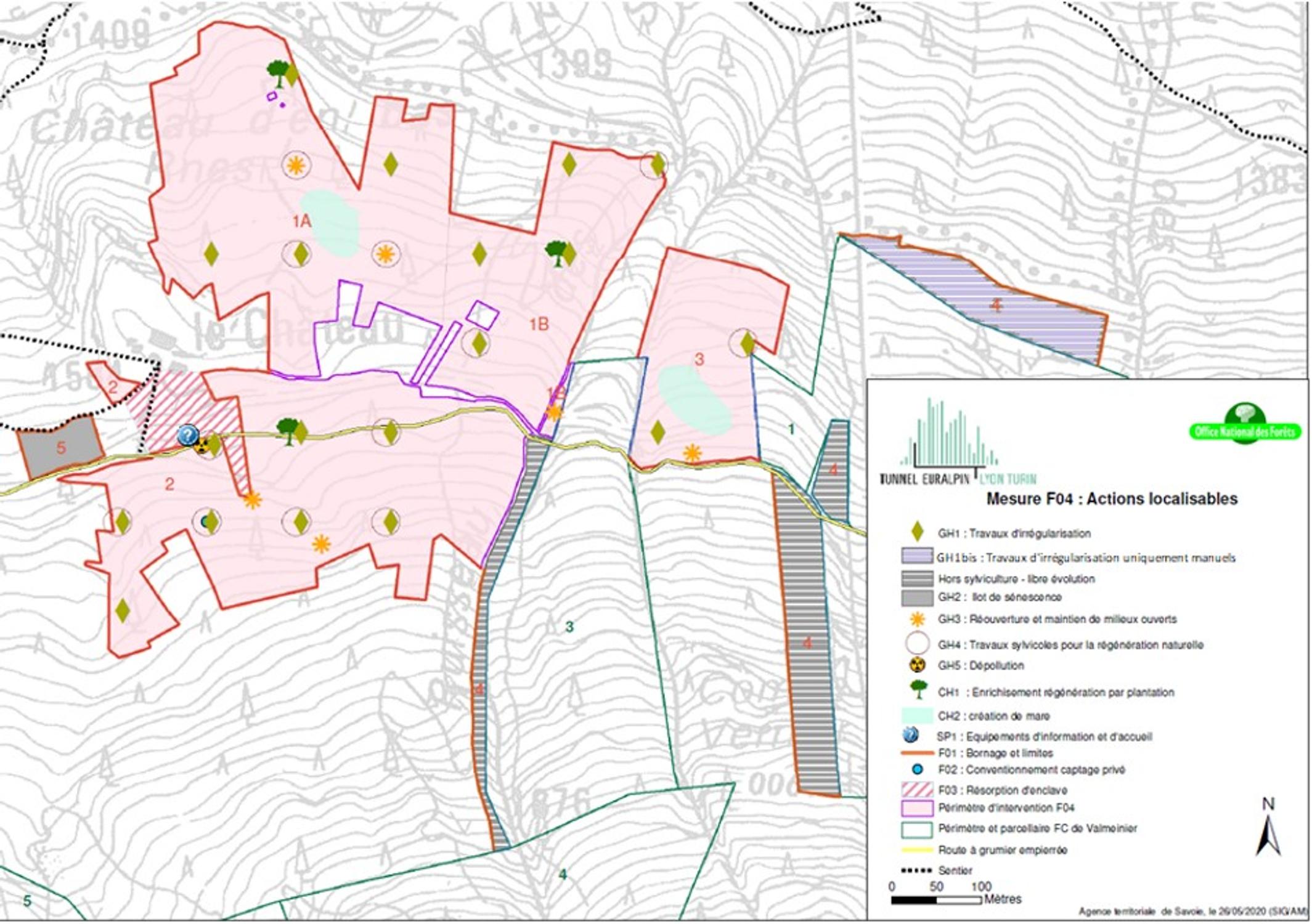
A set of private forest plots, forming a group of around thirty hectares, was acquired by TELT in the municipality of Valmeinier, on both sides of the Prec track leading to Bissorte. This forest, located on a north-facing slope (ubac), is mainly composed of a mix of spruce and fir, with a smaller proportion of larch and broadleaf species. It is situated between 1,450 and 1,800 metres above sea level.
Key issues
The Valmeinier forest provides suitable habitat for many fauna and flora species, including birds—particularly the hazel grouse and small mountain owls—bats, amphibians, and mosses. However, some plots within the site show traces of past inappropriate forestry practices (clear-cutting). When carried out carefully and with full knowledge of the resident fauna and flora, forestry management can be beneficial to biodiversity. In particular, uneven-aged forest management generally promotes biodiversity: by maintaining and balancing the forest stand in terms of tree age and size (vertical structure) as well as species composition, the selective harvesting of trees by informed foresters helps promote the growth and maturation of future trees. Trees need light and space to grow, and a rich, well-structured forest should include large and very large trees. A controlled increase in light also supports natural forest regeneration. Species selection during harvesting allows for greater diversification of the stand, which benefits biodiversity and helps favour species best suited to long-term survival on the site in the context of climate change. These silvicultural interventions fully align with a sustainable development approach.
Partners
Valmeinier Private Forest Association (AFP), French National Forest Office (ONF)
Objectives
Achieve or maintain a good conservation status for habitat types and for existing populations of protected plant species
Increase the species diversity of forest habitats and associated environments.
Raise public awareness of the site's environmental issues.
Manage land ownership to ensure the long-term preservation of habitats.
Monitor the evolution of habitat types and animal and plant species populations on the site.
Discover…
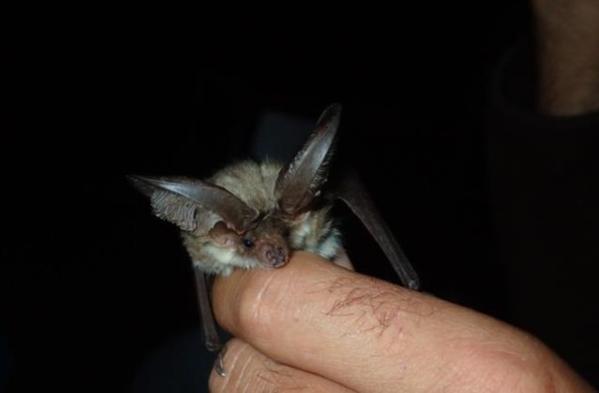
The Mountain Long-eared Bat. This small bat (about the size of a thumb!) owes its name to its disproportionately large ears compared with the size of its body, as well as to its preference for mountainous regions and foothill areas. The study of bats is most often based on detecting the ultrasonic calls they emit. Analysis of the ultrasonic spectrum allows, to a certain extent, the identification of different species. However, in the case of long-eared bats, the three known species cannot be reliably distinguished except through visual observations within their roosts.
The ecology of some bat species remains only partially understood, particularly regarding the types of roosts they use, their breeding sites and their hunting habitats. During a scientific research programme conducted by TELT, bats were fitted with miniature radio transmitters that allowed their nocturnal movements to be tracked using antennas. This work led to the discovery of a roost used by Mountain Long-eared Bats in a cliff above Saint-Jean-de-Maurienne. As all previously known roosts of the species in the Rhône-Alpes region were located in buildings (attics, lofts, etc.), this finding is unusual and represents a significant advance in the understanding of the species’ ecology.