The site
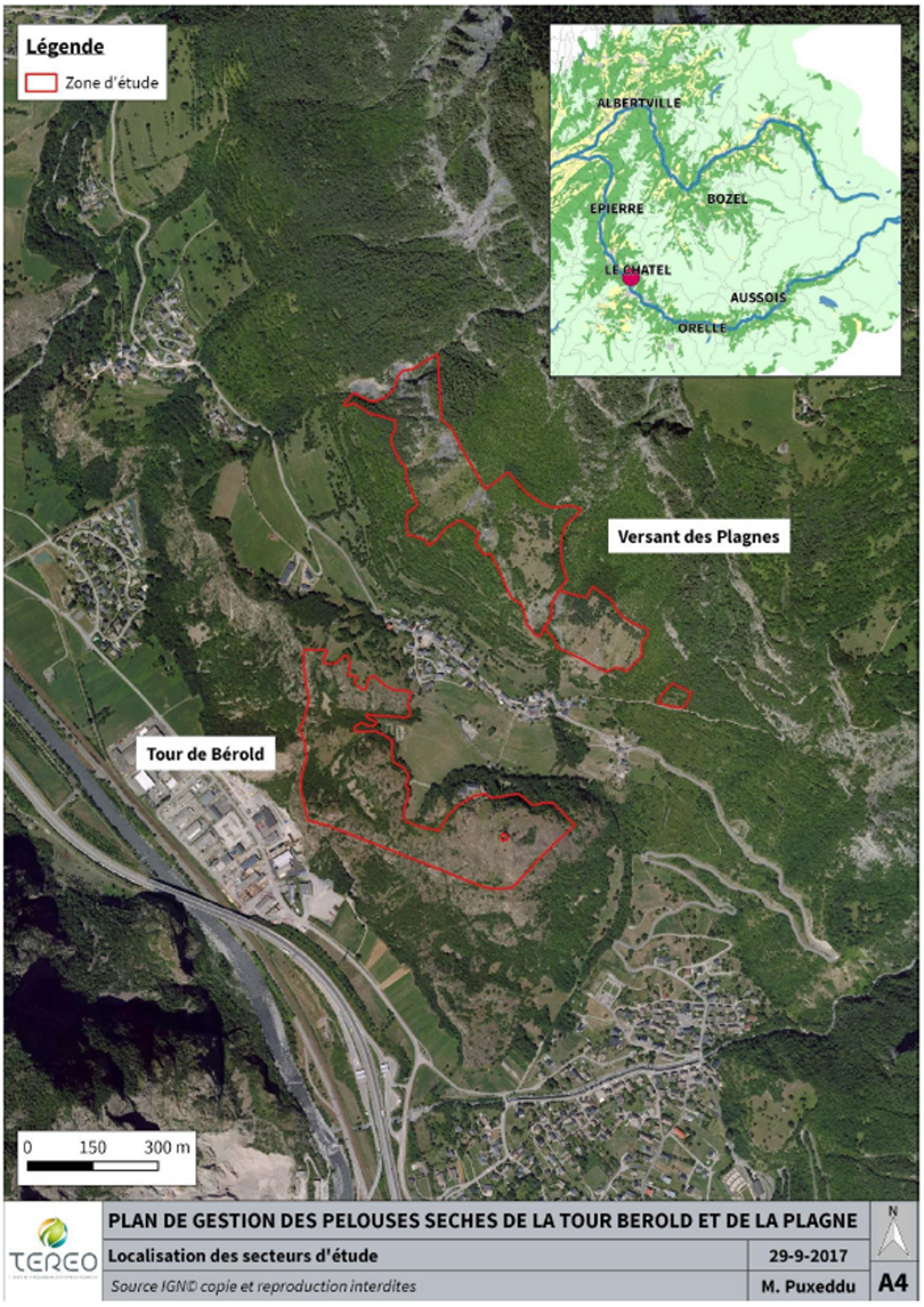
This site includes two large sectors of 13.6 ha each around the village of Le Châtel: on the one hand the emblematic site of the Bérold tower, a siliceous hill bounded to the west and south by the Arc plain and to the north by the main village of Le Châtel, and on the other hand the Plagnes slope, overlooking the village and ranging in altitude from 850 to 1000 meters.
Key issues
The site has a dry, steppe-like environment that supports a specific flora and fauna: Valais fescue, sand broomrape, and dyer’s alkanet are plant species associated with very dry open steppe habitats. The rocky outcrops of Bérold are also highly favorable to wildlife, and several remarkable insects have been recorded there, such as the Apollo and the hedge brown skipper, rare and threatened butterflies. On the Plagnes slope, two notable orthopterans are found: the Mediterranean grasshopper and the purple bush-cricket. Steppe grasslands are remarkable habitats that are very sensitive and threatened by inappropriate agricultural practices. In contrast, semi-dry grasslands require agricultural activity to ensure the persistence of the habitat.
Partners
Savoie Conservatory of Natural Areas, Pastoral Land Association of the Châtel alpine pastures, Municipality of La Tour-en-Maurienne
Objectives
Conserve and improve the ecological quality of steppe habitats
Maintain local pastoral activity adapted to remarkable habitats
Maintain a mosaic of open habitats and shrub/wooded habitats
Improve on-site communication
Monitor the evolution of faunal and floral species populations on the site
Discover…
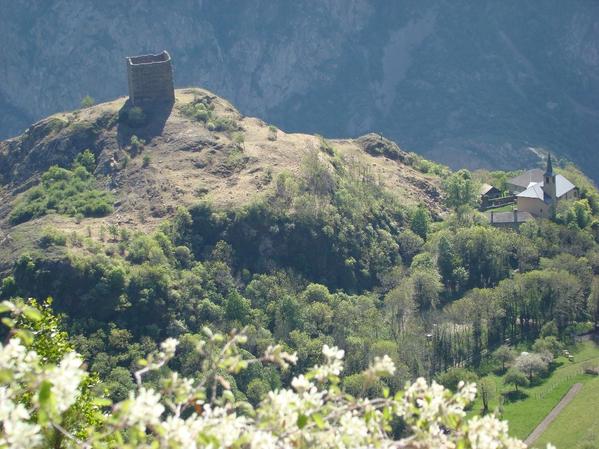
The steppe grasslands of the Tour de Bérold. On this historic site in Savoie, dominated by a tower built in the 9th century and restored by Bérold of Saxony, ancestor of the first Count of Maurienne and founder of the House of Savoy, the south-facing steep slopes combined with the particular semi-continental climate of the Maurienne valley create a dry, steppe-like environment. The very thin, well-draining soil with rock outcrops has enabled the development of these steppe grasslands typical of the Maurienne, with biodiversity that is particularly rich and unexpected at such latitudes.